A mining tire that stands up to 4 meters tall and weighs as much as 4 tons cannot be shredded, transported, or landfilled whole. It has to be cut apart first — and that is the job of the tire dismantling machine. In an OTR (off-the-road) tire recycling line, this machine is where every giant tire starts, and the performance of everything downstream depends on it.
This guide explains how a tire dismantling machine works, the two standard preprocessing routes for OTR tires, and how to configure one around the material you actually receive.
Why Giant Mining Tires Must Be Cut First
OTR tires used on mining dump trucks, loaders, and port machinery are a different category from car and truck tires:
- Size: diameters from 1.8 m to 4.0 m and beyond
- Weight: roughly 500 kg to 5,000 kg per tire
- Structure: tread rubber up to 300 mm thick, with heavy steel bead wire embedded in each sidewall
A dual-shaft shredder built for car and truck tires cannot grab, bite, or shear a whole giant tire, and the steel bead alone can destroy a set of shredder blades in a single shift. Cutting the tire into sections first — with a tire dismantling machine — protects the equipment behind it and brings three more benefits: cut sections stack efficiently for cheaper transport, steel and rubber can be separated stage by stage, and pre-cut rubber feeds downstream machines at a stable rate.
What a Tire Dismantling Machine Does
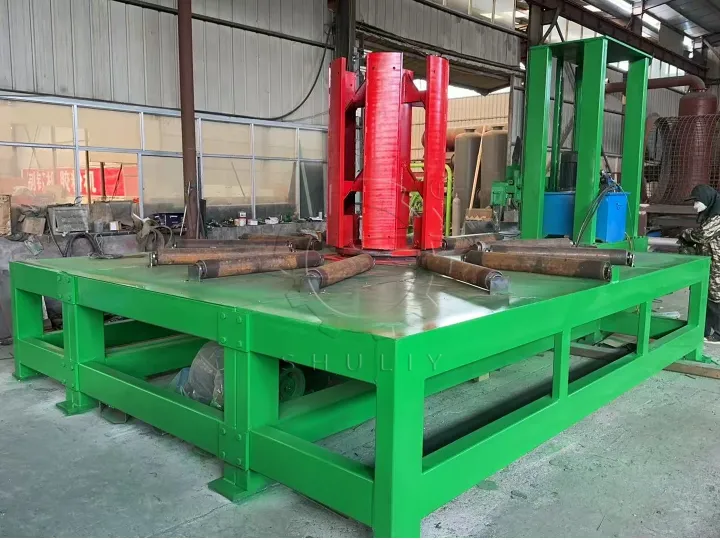
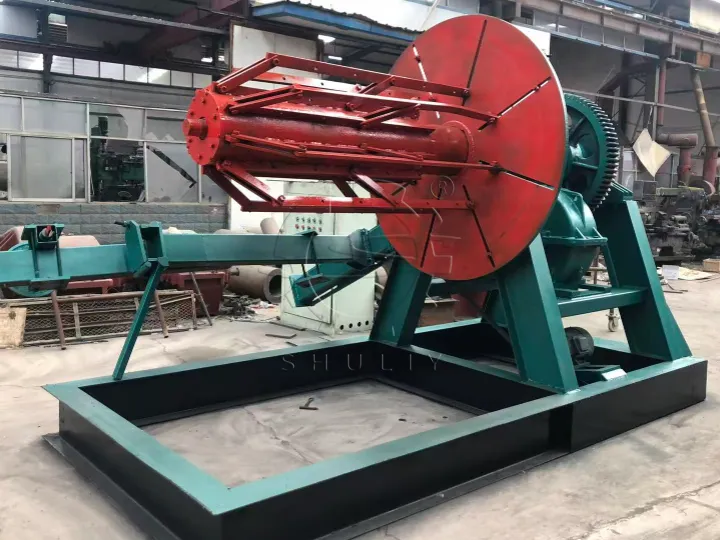
A tire dismantling machine is a hydraulic cutting system that cuts a whole OTR tire into four to six sections — typically two sidewall parts and two to four tread arcs. Instead of tearing material by brute force, it makes controlled, precise cuts with hardened blades driven by high-tonnage hydraulic cylinders, so blade wear per ton of rubber stays far lower than in a shredder.
The bead wire rings remain embedded in the sidewall sections after cutting. They are removed in the next stage by the OTR bead wire separator, which works with the tire dismantling machine as a pair in most OTR lines.
How It Cuts a Giant Tire: Step by Step
Take one 27.00R49 mining tire — about 2.7 m in diameter and 1,500–2,000 kg — moving through a typical tire dismantling machine:
- Loading and clamping. The tire is placed on the machine bed, and a centralizing chuck grips and rotates it so the blade can follow a continuous path around the circumference.
- Sidewall cutting. The hydraulic cutting arm presses its blade into the rotating tire, separating both sidewalls from the tread ring in one pass each.
- Tread sectioning. The thick tread ring is cut into two to four arc sections sized for the downstream shredder.
One 27.00R49 tire is typically processed in 10–20 minutes, producing four to six clean sections. These then move to the bead wire separator, which squeezes the steel rings out of the sidewall pieces — leaving wire-free sections ready for high-volume shredding.
The Two Preprocessing Routes for OTR Tires
OTR preprocessing follows one of two proven equipment routes, chosen according to your raw material:
Route 1: OTR tire debeader + OTR tire cutting machine. The debeader draws the steel bead rings out of the whole tire first; the cutting machine then sections the tire. This route suits operations receiving tires with intact, accessible beads.
Route 2: OTR tire dismantling machine + OTR bead wire separator. The dismantling machine cuts the whole tire into four to six sections, and the separator strips the steel rings from the sidewall pieces. This route is more robust for mixed, oversized, or partially pre-cut tire streams.
| Machine | Role | Route |
| OTR tire debeader | Draws bead wire from the whole tire | 1 |
| OTR tire cutting machine | Sections the tire after wire removal | 1 |
| OTR tire dismantling machine | Cuts the whole tire into 4–6 sections | 2 |
| OTR bead wire separator | Strips steel rings from sidewall sections | 2 |
Both routes end at the same point: clean, wire-free OTR rubber sections that a shredder can handle safely.
Matching the Configuration to Your Raw Material
The right configuration — cutting force, blade spec, clamping system, working diameter — depends on the tires you actually process:
| Tire Size | Diameter | Approx. weight | Configuration impact |
|---|---|---|---|
| 18.00R25 | 1.6 m | 400–600 kg | Entry-class cutting requirement |
| 24.00R35 | 2.1 m | 900–1,200 kg | Stronger clamping and blade load |
| 27.00R49 | 2.7 m | 1,500–2,000 kg | High-tonnage hydraulics |
| 33.00R51 | 3.0 m | 2,000–3,000 kg | Large working table |
| 40.00R57 | 3.6 m | 3,500–4,500 kg | Heavy-duty frame and blades |
| 59/80R63 | 4.0 m | 5,000+ kg | Custom heavy-class engineering |
Always size for the largest tire you expect to receive, not the average — and remember that thicker tread demands more cutting force than diameter alone suggests.
Because every operation feeds different material, each Shuliy tire dismantling machine is configured to order around the customer’s raw material: tire size range, single-tire weights, whether rims are still mounted, and target volume. Send us these details, and our engineers will put together the matching configuration.
Dismantling Machine vs. Shredder: The Right Sequence
The two machines are not alternatives — the sequence matters. A tire dismantling machine (with its separator) makes precise cuts and prepares steel removal on a few tires per hour; a tire shredder then processes high volumes of the wire-free sections into chips. Feed a whole giant tire directly into a shredder and you get jammed chambers and snapped blades; feed it dismantled, steel-separated sections and you get stable throughput and long blade life.
What the Preprocessing Line Produces
Every output has a market:
- Tread rubber sections — dense, clean feedstock for chips, crumb rubber, or pyrolysis
- Steel-free sidewall rubber — processed like tread rubber after separation
- Bead wire — stripped out whole and sold as clean scrap steel; one 27.00R49 bead ring yields tens of kilograms
- Rims and lock rings — recovered intact where present
For a mine site or recycling yard, preprocessing turns a disposal liability into three sellable streams: rubber chips, crumb rubber feedstock, and scrap steel.
Six Details That Decide Your Configuration
Because each tire dismantling machine is built to order, your quotation depends on the material information you provide:
- Tire size range, from smallest to largest
- Single-tire weights, especially your heaviest
- Material condition — whole or pre-cut, rims on or off, mixed with truck tires
- Daily or monthly volume in tons or pieces
- Downstream plan — chips, crumb rubber, or baling for transport
- Site power supply — electric or diesel-hydraulic
FAQ
How is the steel bead wire removed from OTR tires?
In Route 1, the OTR tire debeader draws it out of the whole tire before cutting. In Route 2, the OTR bead wire separator strips the rings from the sidewall sections after the tire dismantling machine has cut the tire apart.
Which route should I choose?
If your tires arrive with intact, accessible beads, the debeader route removes steel earliest. For mixed, oversized, or pre-cut feed, the dismantling machine + separator route is more reliable. Share your material details and we will recommend the combination.
Can it process tires with the rim still mounted?
Yes. Rim handling is one of the raw material details that shapes the custom configuration, so mention it when requesting a quotation.
How many OTR tires can one machine process per day?
It depends on tire size, steel content, and the configuration. As a reference, tires in the 1.8–2.7 m range take 10–20 minutes each; exact capacity is confirmed after our engineers review your material.
Conclusion: Dismantling Is the Foundation of OTR Tire Recycling
Giant mining tires cannot be shredded, shipped, or landfilled whole — and forcing them into unsuitable equipment destroys margins. A properly configured tire dismantling machine, working in the right route with a bead wire separator or a debeader, turns a 4-ton liability into clean, sellable rubber and steel streams.
Planning an OTR tire recycling project? Send us your raw material details — tire sizes, weights, photos, and target capacity — and contact Shuliy Machinery for a customized tire dismantling machine solution and quotation, or explore our complete OTR tire recycling lines .